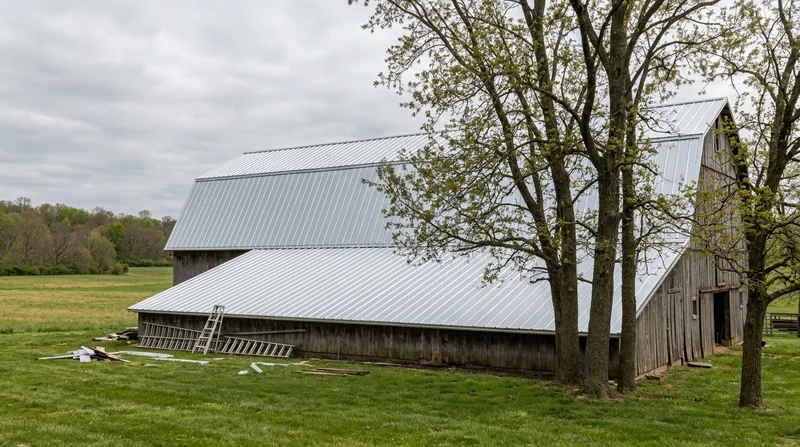




Commercial & Agricultural Metal Roofing in Cincinnati: Built for Barns, Shops and Warehouses
Cincinnati sits on seven steep hills above the Ohio River, and the commercial and agricultural buildings scattered across Hamilton, Clermont and Warren counties take a beating from the same weather that hits the houses. Commercial & Agricultural Metal Roofing in Cincinnati means panel systems sized for barns, workshops, garages, churches and light commercial buildings, from the farm sheds out past Milford and Loveland to the shops and warehouses down in the river valley. Metal handles the hail, straight-line wind and heavy wet snow that roll through here far better than failing shingles or rusted-through tin. We install, repair and replace these roofs with panels matched to the building, not a one-size kit. If you are weighing a full re-roof, start with our metal roof installation page for how the systems go together.
Why Commercial and Agricultural Metal Roofing Matters in Cincinnati's Climate
This is a freeze-thaw climate, not a mild one. Ice storms and wet snow load the roof, then meltwater works into every fastener and lap, and the cycle repeats through winter and early spring. Add summer hail and straight-line thunderstorm wind, plus sugar maples, tulip poplars and sycamores dropping limbs on outbuildings, and exposed-fastener panels take the worst of it. The dominant failure mode on older agricultural roofs here is backed-out and rusted screws at the laps, which opens the panel to wind lift and leak paths.
- We replace rusted or backed-out fasteners before they turn a small repair into a full panel replacement.
- We check and reset ridge caps and closures that wind has lifted on exposed ridges.
- We inspect and renew sealant at penetrations, which freeze-thaw pulls apart faster than sun alone.
- We verify panel attachment and purlin condition on older barns before recommending overlay or replacement.
On a farm building, catching screw and sealant failure early is the difference between a maintenance visit and a new roof.
Key info: A pole barn outside Milford with a 20-year-old screw-down roof typically shows rusted screws and lifted closures long before the panels themselves fail. Re-fastening and re-sealing usually costs a fraction of replacement and buys years.
For official permit and inspection requirements, always confirm with the local building department, since thresholds and fees vary by jurisdiction. The City of Cincinnati's buildings and inspections department is the starting point for city properties: cincinnati-oh.gov/buildings.
How We Approach a Commercial or Agricultural Metal Roof in Cincinnati
Every building is different, so we start with the structure and work outward. On a light commercial building in the river valley, access and roof traffic matter as much as the panels. On a barn, we look at purlin spacing and how the original roof was attached. The steps below are how a typical job runs from first call to final walk-through.
- We walk the roof and the building, measure the deck or purlins, and note existing layers and penetrations.
- We identify the panel system that fits the span, slope and budget, from corrugated and ribbed exposed-fastener panels to standing seam.
- We document the existing condition with photos, useful if you are filing an insurance claim after a storm.
- We remove or prepare the old roof, replace damaged purlins or decking, and install new underlayment or insulation as specified.
- We install panels, closures, flashing and fasteners to the manufacturer's pattern, then clean the site and walk the roof with you.
We handle the panel work in-house and coordinate the trades a commercial building needs, so you deal with one point of contact.
Local example: A church hall in Norwood with a low-slope addition needed a standing seam panel with a taller seam and proper closure at the wall intersection. We matched the profile to the main roof and used flashing and skylight repair work at the penetrations so the addition tied in cleanly.
Panel Systems We Use for Commercial and Agricultural Buildings
The right panel depends on slope, span, budget and how much foot traffic the roof sees. Exposed-fastener panels are the workhorse for barns and shops, while standing seam suits buildings where leaks at fasteners are the main worry. The table below shows how we match systems to buildings around Cincinnati.
| Approach | Description | Best for |
|---|---|---|
| Corrugated and ribbed exposed-fastener panels | Screw-down panels with visible fasteners, economical and fast to install | Barns, sheds and workshops where budget leads |
| Standing seam panels | Concealed fasteners with raised seams, fewer leak points | Light commercial, churches and low-slope additions |
| Insulated panel systems | Panels with factory foam core for thermal and condensation control | Shops and buildings where interior temperature matters |
| Retrofit over existing metal or shingles | New panels over a sound existing roof with proper purlins | Buildings where tear-off is costly or disruptive |
| Repair and re-fastening | Screw replacement, sealant renewal and closure reset | Older roofs with sound panels but failing fasteners |
We match the panel and the fastening pattern to the building, not to a sales sheet, so the roof performs through Cincinnati winters.
Commercial & Agricultural Metal Roofing Cost in Cincinnati: What to Expect
Pricing on a commercial or agricultural metal roof depends on square footage, panel system, slope, access and how much of the old roof comes off. A small barn re-roof is a different number than a warehouse with a low slope and multiple penetrations. We start every job with a free estimate, and we give you a clear scope before any work begins. Two or three estimates is the smart way to compare, and you should ask each contractor what panel and fastening system they are quoting.
For a fuller breakdown of how we price metal roofing work, see our pricing overview. The final number is set on site, after we see the deck and the access.
What to Look For When Hiring a Metal Roofing Contractor Near Cincinnati
Hiring for a commercial or agricultural roof is a bigger commitment than a residential repair, so check the basics before you sign. A contractor should be licensed and insured, able to show references on similar buildings, and clear about who pulls the permit. In historic districts and under HOA design review, panel profile and color can be restricted, so confirm that early. Ask how they handle storm damage documentation if you plan to file a claim, and remember that insurance coverage is decided by your carrier, not the contractor.
To set up a walk-through on your building, reach out through our contact page or call (513) 650-6986.
Commercial & Agricultural Metal Roofing in Cincinnati: Pricing Guide
| Service | Price | Details |
|---|---|---|
| Roof inspection and written scope | Free estimate | On-site walk of the building, panel and fastener check, written scope with no obligation to book |
| Screw replacement and re-fastening | Starting at $450 | Rusted or backed-out screws replaced, closures reset and sealant renewed on accessible roof areas |
| Barn or workshop re-roof | Starting at $4,500 | Exposed-fastener panel install over prepared purlins, price moves with square footage and access |
| Light commercial standing seam | On estimate | Concealed-fastener system priced after deck, slope and penetration review on site |
| Travel | Included | In Cincinnati and surrounding Tri-State counties, no separate call-out or mileage fee |
| Estimate | Free | Response within 24h at (513) 650-6986, no obligation to book |
Indicative pricing, the exact cost depends on square footage, finish, and site access. Free personalized estimate within 24h at (513) 650-6986.


